Keeping your feet warm when winter cycling can be a big challenge – here are some tips to avoid cold feet
Riding through winter maintains your fitness, gets you out of the house, connects you with friends and gets you from A to B. But cold, wet feet is often a feature of winter rides, especially when mountain biking in Scotland. To try and improve foot comfort, check out these tips for mountain, gravel and road bikers (and for more cold weather riding tips, see Staying warm on the bike).

What causes cold feet when cycling?
When cycling in cold conditions, our feet are particularly at risk of getting cold. They are a long way from our body’s warm core, their blood flow can become restricted and they are exposed to splashes, spray and wind. The factors below can add to the problem:
- Too-thin socks
- Highly ventilated cycling shoes
- Pressure points (poor foot alignment, thin soles, overtightened buckles)
- Metal pedals acting as a heatsink (quite a minor effect)
Keeping feet warm when winter cycling
Cycling with cold feet is miserable and painful. It’s the nemesis of winter riders and problemmatic because it’s almost impossible to warm feet while riding.
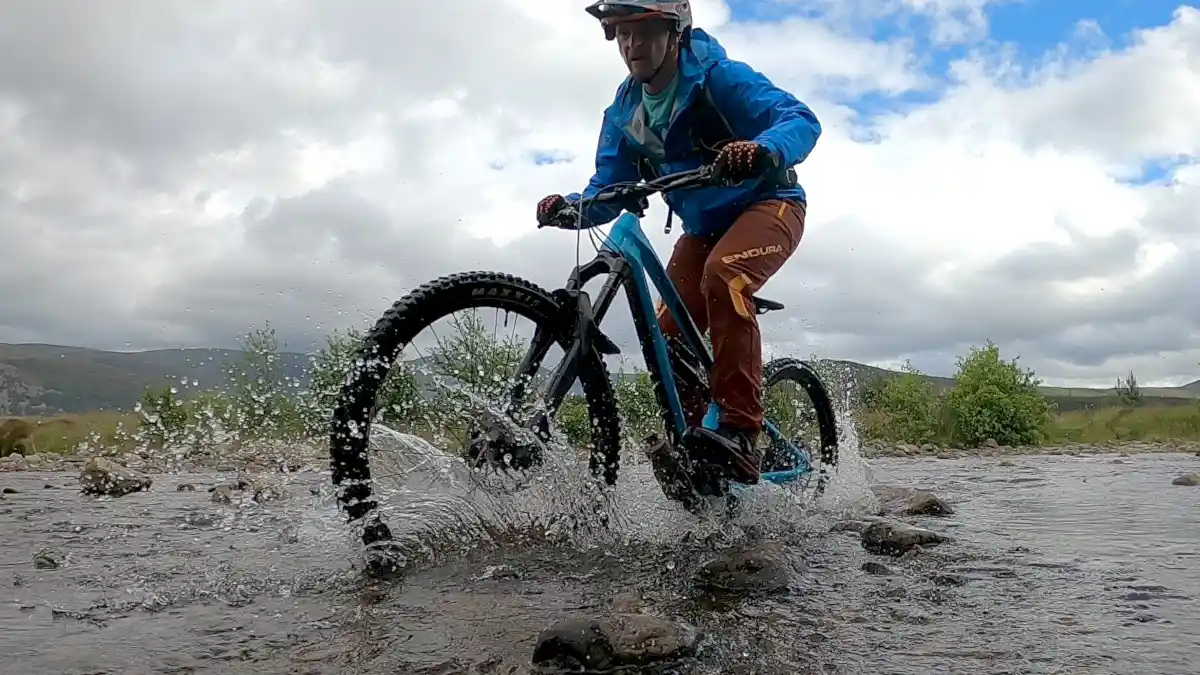
First, cold feet can be avoided when cycling simply by keeping them dry. So if it’s not actually raining, avoid puddles and fording altogether. But if they’re unavoidable, and the water level is below hub height, freewheel with level pedals (if possible) and keep your speed low.

Tips for warmer feet when biking:
- Avoid puddles and fording
- Warmer socks
- Waterproof socks
- Neoprene socks
- Overshoes
- Tape behind cleats
- Comfortable, good-quality shoes
- Electric or chemical footwarmers
See below for some more tips for warmer feet.
Firstly, try thicker socks. Winter weight cycling socks or thin walking socks are warmer than your ultrathin summer ones. Good quality ski socks can work too because they are warm without being bulky. Waterproof socks can be really effective at keeping your feet dry, and so prevent cold feet when cycling. Keep them puncture-free by trimming your toenails and removing sharp bits from the ends of your cleat bolts. And for a low-tech solution that works in extremely wet conditions, try neoprene socks. They’re not very warm on their own, but trap a thin layer of body-temperature water around your foot (they can smell awful though!).

Cycling overshoes are a great way to prevent cold feet. You fit them over your existing shoes and they reduce windchill and add some waterproofing. Thin nylon ones pack down small, whilst thicker neoprene ones add serious protection. Most are compatible with clipless pedals and are a great idea when deciding what to wear for mountain biking. Those made by Scottish company Endura are my personal favourites.
Tape behind cleats if riding clipless. Remove your footbeds and seal over the the cleat area with a good quality waterproof duct tape. This should help reduce moisture coming up from spray underneath (although it can trap moisture in the shoe).
Comfortable, good-quality shoes are important. Highly ventilated summer SPD cycling shoes can easily result in cold feet, especially if they are too tight. Improvised or aftermarket insoles can reduce heat loss, but may well reduce power transfer. Mountain bikers may pefer the softer uppers and thicker soles of flatties. Electric or chemical footwarmers can offset cold shoes and be very effective.
Aftermarket waterproofing spray is unlikely to be of much long-term use, especially if your shoes weren’t waterproof to begin with.

A cheap and cheerful solution is to put a plastic bag over your sock before putting your shoe on. Also, try carefully prewarming your shoes on a radiator.
So, although wet, cold feet is a common problem for winter cycling, there are loads of possible solutions. Hopefully these tips will help you enjoy wild rides at any time of year.

Leading and coaching near Aviemore and beyond
