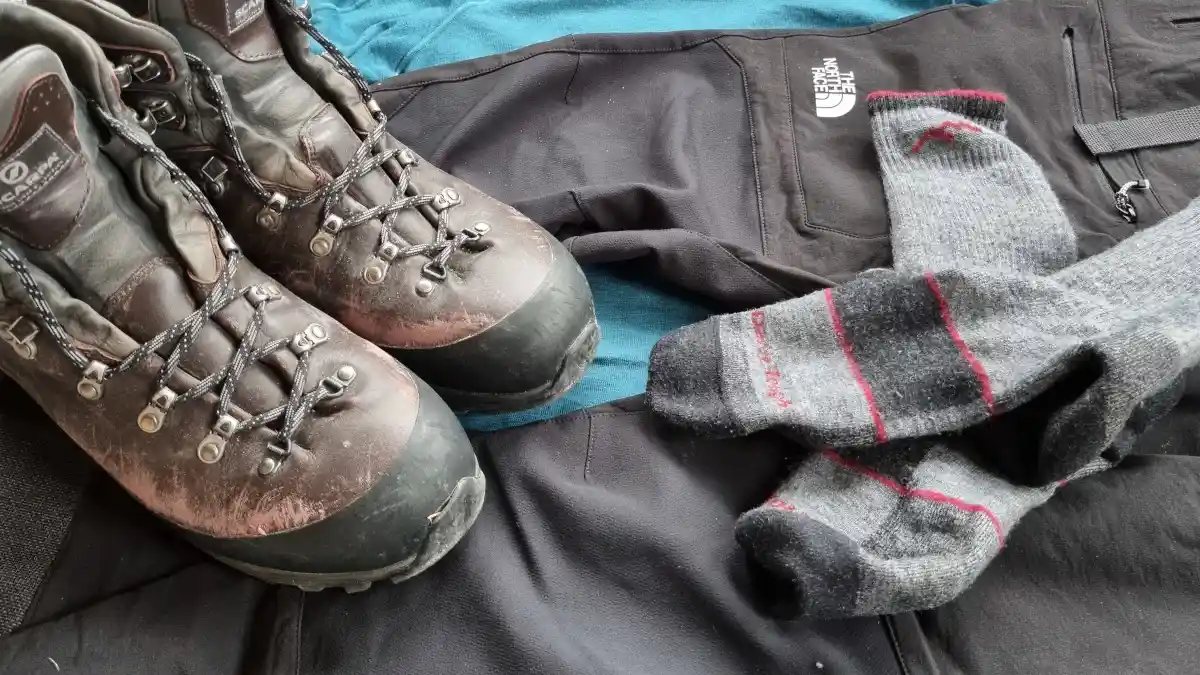
List of appropriate clothing to wear for hiking in summer, plus tips on clothes material and layering for the outdoors.
Top
- Baselayer top
- Lightweight fleece(s)
- Waterproof jacket (when needed)
Legs
- Wicking underwear
- Hiking trousers
- Waterproof trousers (in rucksack if not needed)
Feet, hands and head
- Walking socks
- Walking boots (H)
- Gaiters (where appropriate)
- Hat
- Gloves
- Sunglasses
- Neck gaiter
H = Hire locally? (Check availability)
L = Group leader
NOT ALL ITEMS ALWAYS NEEDED!
Tips on what to wear for hiking
Firstly, wicking synthetic fabrics or merino wool are good for hiking wear, especially your baselayer top and underwear. These fabrics are far better than cotton in temperate climates. Secondly, lightweight nylon trekking trousers or leggings are appropriate clothing for hiking in changeable summer weather. Shorts are OK, but provide little protection against sunburn, scrapes and insect and tick bites. Importantly, avoid jeans because they can be uncomfortable, heavy and take ages to dry. Your midlayer could be synthetic fleeces or wool layers. To help you keep cool in warm weather, you may want a baseball cap, sunhat or Buff. Finally, bring a breathable waterproof jacket (and add waterproof trousers/’rainpants’ if needed).
Also see:
Expect changeable weather in the Scottish Highlands. Sometimes it is sunny and warm, sometimes it’s cold, wet and windy! This is why we always recommend following the ‘Layering Principle‘ when deciding on clothes to wear for summer hiking.
What foot wear do you recommend?
To begin with, wear proper walking socks to improve comfort and reduce the chance of blisters. Next, wear footwear sufficient for the terrain – usually walking boots are a good choice. Although walking shoes with a good grip can be OK on easier terrain, they are not ideal on the mountains. Many good brands are available (eg: Berghaus and Scarpa), but whatever the make, they should be ‘broken in’ first. Aftermarket footbeds are recommended. Leather or waterproof fabric are both good choices, but check the sole is in good condition (you may be able to hire boots locally).

Are you a guest on an Arc Guiding trip?
Check with the guide when deciding what to wear/pack. Choose items from the list depending on the weather, route and type of group.

Discover Cairngorms high points and more

Hiking wear FAQ
Follow the layering principle: wear a wicking baselayer, lightweight fleece mid layer and a lightweight waterproof outer layer when needed. Decent walking boots are a must.
Shorts may prevent overheating, but they offer far less protection against sunburn, scratches, midges and ticks. Trekking trousers are a good alternative.
Waterproof trousers are a very good idea in bad weather, but they can be hot and take up space in your rucksack.
You have to weigh up the risk and consequences of a slip and fall. Usually, boots give you a greater margin of safety when hillwalking.
Ponchos are good are good waterproofs for sheltered conditions. However, they offer less protection from wind-driven rain often found in the mountains.
Decent outdoor clothing is always a good investment. Base layers and shell layers will make a particularly big difference to your comfort levels when hiking.
Jeans might be OK for short walks in nice weather in the valley. But on longer walks and in poor weather, jeans are not ideal. This is because they absorb water, become uncomfortable and make you cold.