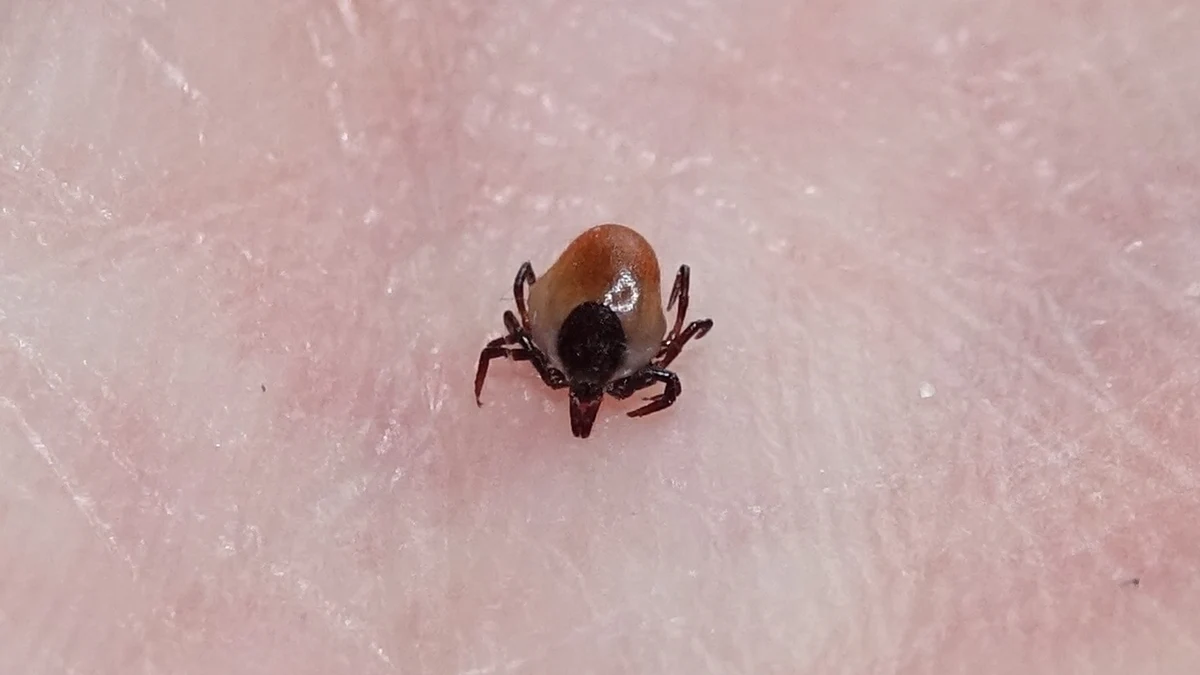
During tick season in Scotland, preventing bites, prompt removal and careful treatment all reduce the risk of infections such as Lyme disease.
When spending time outdoors anywhere with dense vegetation, it is important to consider potential exposure to tick bites. These tiny creatures can be very hard to see, and their bites can go undetected. But the consequences can be quite serious. In this post, we will look at the basic steps needed to help prevent tick bites in the first place. Then we will explore the subjects of tick removal, treatment of bites and Lyme disease (all topics on which I brief my outdoor activities clients during tick season in Scotland). Read on to learn more.
📆 Tick season in Scotland runs from about March to late October (timings dependant on weather).

What are ticks?
🕷️ Ticks are tiny arachnids (relatives of spiders) which suck blood for food. Tick larvae overwinter in leaf litter and, as warmth and humidity increase, they climb up vegetation from which to grab hold of passing animals. Many species of ticks occur around the world, each preferring different animal hosts. The adults and their nymphs (young) may have different hosts and not all ticks carry disease. Deer ticks and Wood ticks (Dog ticks) carry different diseases in the US. However, in Scotland it is the ‘Sheep tick’ (AKA Castor Bean tick, Ixodes ricinus) which carries Lyme disease and is most prevalent amongst our wildlife species.
The importance of preventing tick bites
‘Prevention is better than cure‘ as the saying goes, and this is very appropriate with tick bites. The potential consequences of their tiny, almost unnoticeable bite can be lifelong debilitation through various bacterial diseases. It is true that not all ticks carry these bacteria. But it is also true that infection rates are increasing in some places, likely driven by climate change and other factors. With tick season in Scotland starting earlier and lasting longer, we recommend following the steps below when hiking or mountainbiking.
4 simple steps to help prevent tick bites
- Apply insect repellent
- Dress carefully to prevent tick bites
- Avoid long vegetation where possible
- Perform a tick check
Apply insect repellant
Although ticks aren’t insects, most types of insect repellant should help prevent tick bites (but you should check the label to be sure). Apply it as per the manufacturers instructions, concentrating on ankles, lower legs and perhaps forearms.
☠️ It is dangerous to use livestock/pet anti-tick products on yourself. These strong chemicals are precisely dosed and designed to penetrate animal fur or persist in the bloodstream!
Dress carefully to prevent tick bites
When deciding on hiking wear or biking wear remember the dress code for tick areas! Anything that creates a physical barrier between you and the vegetation is recommended. So, long trousers, shoes/boots and socks and even long sleeves are the items to choose. To be really thorough, tuck your trouser legs into your socks and forget about how it looks! To stop ticks in their tracks, some people even wrap wide tape, sticky side out, around the bottom of their trouser legs. Save the sandals and shorts for elsewhere.
Wear light-coloured clothing to make it easier to spot ticks crawling on you.

Avoid long vegetation where possible
Because ticks cannot fly they must climb up vegetation to attach to a new host. Therefore, minimise hiking or biking through dense, tall, dry grass or leaves. In Scotland, we also recommend taking extra care in bankside vegetation when canoeing and kayaking. Where possible, choose a wide path that avoids contact with tall grass, etc. If you can’t avoid it, take the precautions above and do a thorough tick check afterwards (see below). If you are bivvying or camping, a groundsheet, bivvy bag or hammock can also help prevent tick bites.
😮 Undress and toilet carefully! Be especially careful when going to the toilet or undressing near vegetation. If possible, use rocky or sandy areas instead.

Perform a tick check
A tick check can prevent bites by removing ticks before they attach. Despite moving very slowly, they grip tightly and can be extremely small, so take your time. Ticks will usually go for parts of the body with soft skin and rich blood flow. So pay particular attention to ankles, behind the knees, armpits and chest. Unfortunately, this also includes intimate areas and you will likely want privacy before checking here! So a good time to do this might be during a swim, wash, shower or visit to the toilet.
You may need help to properly check parts of your body you can’t see. Use a mirror, or consider asking someone you trust.

How ticks bite
Both male and female ticks feed on blood, with the females needing it for egg production. First, they ascend long grass and plant stems. The tick then waves their antennae in the air to detect the warmth and carbon dioxide emitted by passing animals. They then attach using powerful clawed legs and slowly climb to a part of the body where the skin is soft and has a good blood supply (eg: belly, joints, between legs). The bite is usually painless and the tick can feed for several days. As they feed, they inject an anticoagulant, which prevents the host’s blood clotting and blocking the ticks mouthparts. The tick slowly grows in size (potentially to the size of a small pea) and then falls off. If there is no infection, the tiny wound might show a little redness and swelling, with some itching.
Tick bite treatment
Unfortunately, measures for preventing tick bites don’t always work. The treatment is to remove the tick cleanly and monitor the bite site for signs of infection over the following days and weeks. We will look at this in more detail below.
Tick removal advice
If a tick is found attached, it should be removed with a specific tick removal tool as soon as possible. In the UK, doctors recommend within 24 hours, to minimise the risk of any infection. Ticks will eventually fall off after completing their blood meal, but this will almost certainly occur too late to prevent transfer of bacteria into your blood. Tweezers are an OK alternative to a tick remover, but almost any other method increases the risk of leaving the ticks mouthparts embedded in the wound. This can lead to secondary infection, even if the tick was ‘clean’. Outdoor retailers, pet shops and vets are good places to buy tick removers.
Tick removal tools come in various designs, but they are usually small, inexpensive plastic or metal hooks or ‘cards’. These are easily the most effective way to remove the entire tick.

First, place the tool directly between your skin and the ticks head. Follow the manufacturers instructions to carefully pull the entire tick away from the wound. Usually, gentle, continuous pressure is enough and there is rarely any pain or blood. Next, dispose of it carefully. Removing it won’t kill it and you don’t want it to find its way back to you (especially if it is infected).
⚠️ Don’t put anything on ticks to make them let go. Applying alcohol, toothpaste or a flame, etc actually increases the risk of them spitting the disease-causing bacteria into you.
Monitoring for symptoms
After successful removal, it is important to remember that not all tick bites result in disease. However, tick-borne infections require specialist medical treatment. So recommended advice is to keep checking the wound and yourself for classic signs of bacterial infection. These include:
- Redness, swelling or unusual rash spreading from the wound site.
- Flu-like symptoms (fever, feeling more tired than usual, headache, nausea, cough, sore throat, chills, etc).

⚠️ If you do suspect infection, seek a doctors advice as soon as possible. You should inform them you have been in a tick area and, if necessary, request a blood test. See the Lyme Disease Action website for further advice.
Lyme disease and other tick-borne infections
Tick bites can cause several harmful diseases in humans including tick-borne encephalitis (TBE), Rocky Mountain spotted fever, anaplasmosis and Lyme disease. For many years, Lyme disease (AKA Lyme borreliosis) has been the main risk in Britain, caused by the Borrelia bacterium. This disease can involve a wide variety of physical and mental symptoms, some of which can be quite severe and long-lasting. Unfortunately, symptoms can easily be overlooked or misdiagnosed. Diagnosis usually involves a blood test but, because of the risks and difficulties, treatment with strong antibiotics is sometimes started prophylactically (ie: before a confirmed diagnosis). If caught early after the tick bite, treatment is often very successful at preventing further illness. If not caught in time, it can lead to lifelong debilitation.
🎯A ‘bullseye-shaped rash’ centred on a tick bite, is often associated with Lyme disease. However, this rash is not always present.
Tick-borne encephalitis in Britain
Unfortunately, locally-acquired human cases of TBE were confirmed in Britain for the first time in 2025. TBE is a viral disease which, in many human cases, actually shows no symptoms. However, some cases result in meningitis or encephalitis, which can be fatal. The very thorough study investigated 21 potential TBE cases in Britain from as far back as 2015. 3 cases during tick season in England and Scotland were classed as ‘definite or highly probable UK acquisition’1.
TBE is a similar viral disease to LIV, which is endemic and transmitted to red grouse via ticks from mountain hares.
Ticks are tiny blood-sucking arachnids which are easily overlooked. Unfortunately, their bite can, in some cases, transmit bacteria or viruses which can cause severe illness in humans. Therefore, taking basic precautions to prevent tick bites is a very sensible step.

Outdoor activities in Scotland with Arc Guiding

- Callaby, H., Beard, K. R., Wakerley, D., Lake, M. A., Osborne, J., Brown, K., Wand, N., Warner, J., Holding, M., Davies, N. W., Proudfoot, M., Semper, A., Brooks, T., Petridou, C., Houlihan, C. F., Rampling, T., Warrell, C. E., Claire, G. N., & the TBE working group. (2025). Tick-borne encephalitis: from tick surveillance to the first confirmed human cases, the United Kingdom, 2015 to 2023. Eurosurveillance, 30, 5. DOI:10.2807/1560-7917.ES.2025.30.5.2400404 ↩︎